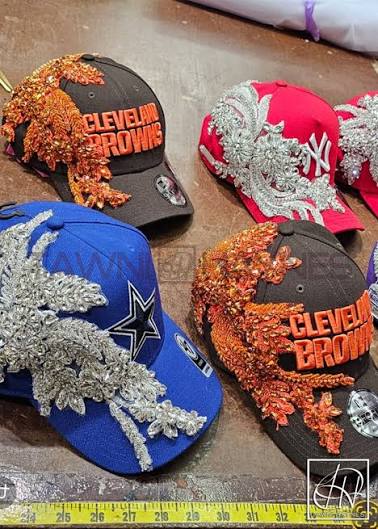
Anyone who has spent a summer in Dubai knows that shade is not optional, it’s a necessity. That single fact goes a long way toward explaining why custom caps remain such a steady seller among promotional items here, long after some other categories have gone in and out of fashion. A cap isn’t just branding, it’s protection from a sun that doesn’t take days off.
Because of that practicality, caps tend to get used far more consistently than a lot of other giveaways. Nobody wears a branded pen on their head, but plenty of people will happily wear a cap that shields their eyes on a construction site, at a beach event, or on the school run, and every time they do, the logo stitched across the front goes with them.
Who Actually Uses Them
Construction and facilities companies are among the heaviest users, often issuing caps as standard part of a uniform kit for outdoor staff. Beyond safety and comfort, a consistent cap style also makes a workforce visually identifiable on a busy site, which has practical value beyond branding alone. Retailers and F&B businesses use caps for staff working outdoor kiosks or delivery roles, where sun exposure is a daily reality rather than an occasional inconvenience.
Event organisers lean on caps heavily too, particularly for outdoor festivals, marathons, and beach activations, where a free cap solves a real problem for attendees rather than just sitting in a goodie bag unused. Golf days and corporate sports events are another reliable market, often pairing caps with polo shirts as a coordinated team look.
Fabric and Fit Considerations
Cotton twill remains the standard for embroidered branding, holding stitching well and ageing reasonably gracefully. For sports or outdoor labour use, moisture-wicking polyester blends are worth considering, since they handle sweat and repeated washing better than plain cotton over a long working season. Adjustable strap options, whether snapback, velcro, or a simple buckle, matter more than they might seem, since a poor fit is often the difference between a cap that gets worn daily and one that ends up in a drawer.
Businesses comparing fabric and closure options can review the current Custom Caps range, which typically covers a spread of styles from structured six-panel caps to more relaxed, unstructured designs suited to casual branding.
Embroidery Versus Printing
Embroidery is the standard method for cap branding and for good reason, it holds up to sun, sweat, and repeated washing far better than most printed finishes. It does come with a slightly higher setup cost and a limit on how much fine detail can be reproduced, so logos with very small text or intricate gradients sometimes need simplifying for a clean embroidered result. Printed caps are an option for larger, budget-driven orders, but tend to fade faster under Dubai’s sun than a stitched design.
Getting the Logo Placement Right
Front-and-centre placement remains the most visible option and is worth prioritising if brand recognition is the main goal. Side placements work well for a subtler look, often favoured by hospitality brands that want a more understated uniform aesthetic. Either way, keeping the design to one or two colours generally produces a cleaner, more professional finish than an overly detailed multi-colour logo squeezed into a small embroidery area.
Planning a Bulk Order
As with most uniform-related items, sizing consistency matters, and it’s worth requesting a sample cap before committing to a large order to confirm fit and stitch quality. Turnaround times vary depending on order size and whether embroidery digitising is needed for a first-time logo setup, so building in a buffer ahead of a launch date or event is generally the safer approach. Teams ready to move forward can browse the full Custom Caps selection to compare pricing across styles and quantities.
Getting Value Beyond a Single Season
A well-made cap, properly sized and stitched with a durable embroidered logo, tends to outlast several seasons of regular outdoor use, which makes it a genuinely cost-effective option when measured against how long it stays in active rotation. Cutting corners on fabric quality to save a small amount per unit often ends up costing more in the long run, once faded, shrunk, or damaged caps need replacing halfway through a working year.
For businesses issuing caps as part of a uniform programme, it’s worth treating the initial order as a long-term investment rather than a one-off purchase, since the difference in cost between a mediocre cap and a genuinely good one is usually smaller than expected, while the difference in how long each one lasts on the job is not.