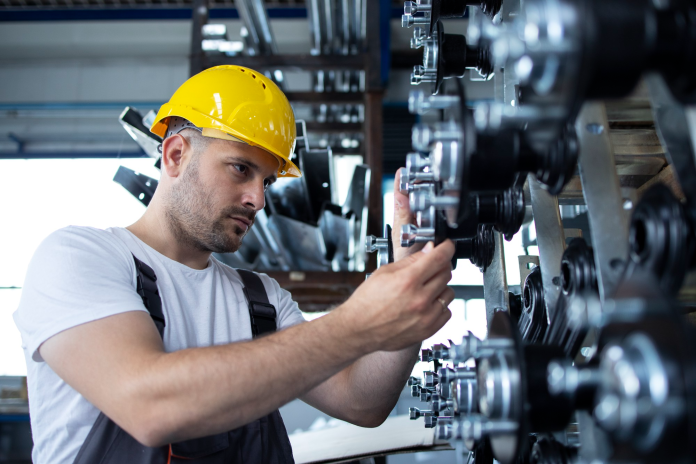
Industrial maintenance is basically the systematic process of inspecting, servicing, and optimizing factory machinery. The primary goal here is to ensure operations run smoothly without any downtime.
Now, these processes are carried out in complex plants that use unique electrical, mechanical, and fluid systems. Technicians at these plants have to use specialized tools because each instrument addresses a specific challenge.
In today’s article, we’re going to talk about widely used tools that form the backbone of these processes.
Let’s get started.
Automatic Tank Welding Machine
An automatic tank welding machine is used to deliver leak-free, uniform structural repairs on industrial storage vessels.
This machine re-welds degraded or cracked joints on aging cylindrical tanks. Similarly, it also regulates travel speed and current to match the original equipment manufacturer specifications. The machine can even eliminate common manual defects (such as porosity) that may cause hazardous leaks.
Now, you might be thinking why this machine is widely used?
So, it maintains uniform bead placement over long tank perimeters. It completes the repairs significantly faster than manual welding teams. Lastly, the operators feel safe as they work at a safe distance from high voltages and toxic fumes. They monitor everything remotely.
Torque Tools
Torque tools secure industrial fasteners to exact specifications, which prevents mechanical failure and structural damage in heavy machinery. Manual torque wrenches and multipliers are common tools used for a range of applications.
For example, in high-pressure or high-vibration environments, they can prevent dangerous failures. They can also ensure correct clamp load on bolts. This eliminates the risk of under-tightening (which causes loose connections) and over-tightening (which could strip threads).
Lastly, they can reduce costly downtime by ensuring error-free maintenance cycles.
Cordless Power Tools
Cordless power tools are portable, battery-powered devices that operate without being plugged into an electrical wall outlet. Drills, drivers, saws, and grinders are among the most common tools.
Now, these tools offer uncompromising mobility, allowing technicians to operate in confined spaces or remote plant areas without being tethered to electrical outlets.
The removal of those cords then eliminates the major tipping hazards. It also reduces the risk of electric shock, especially in damp or dusty factory environments. The maintenance teams can respond faster to emergency repairs and execute routine upkeep jobs without wasting time routing extension cords.
Hydraulic and Lifting Equipment
During maintenance operations, very high force is required to lift, position, and service heavy machinery. The hydraulic and lifting equipment provides just that.
For example, cranes and scissor lifts elevate massive components such as kilns and motors so technicians can easily access internal parts. Similarly, the high-pressure hydraulic cylinders and puller can apply uniform force to remove tightly fitted bearings and pins without damaging the nearby structures.
Using portable hydraulic tools allows the teams to fix or swap heavy parts directly on the factory floor. This prevents the need to transport massive units to external repair shops.
Bottom Line
You must buy these tools from a reputable and reliable supplier to ensure all those processes deliver their intended purpose.