Key Takeaways
- Hydroseeding distributes seed, mulch, water, fertilizer, and stabilizing materials over broad or hard-to-reach areas.
- Vegetative cover can help protect exposed soil from raindrop impact, wind, and surface runoff while plants establish.
- Quality Hydroseeding works with residential, commercial, and government clients throughout San Diego, Orange, Riverside, San Bernardino, and Los Angeles Counties.
- Slopes, compacted soil, drainage problems, and heavy runoff may require added erosion-control measures beyond hydroseeding alone.
- A site-specific seed mix and establishment plan are essential for lawns, native groundcovers, restoration work, and erosion-control projects.
Bare soil can quickly become a major property concern when wind, irrigation, or seasonal storms move loose material across a lawn, lot, roadside, or hillside. For homeowners, builders, commercial property owners, and public agencies, hydroseeding groundcovers Southern California services can provide a practical way to establish vegetation across areas that would be difficult to plant by hand.
Quality Hydroseeding serves Southern California properties with hydroseeded lawns, slopes, groundcovers, native plant mixes, erosion-control applications, burn-area reseeding, dust-control work, and commercial seeding. The right approach depends on the soil, slope, sunlight, water access, site use, and the cover the property needs over time.
Why Bare Ground Is a Concern
Exposed soil is common on newly graded lots, damaged lawns, vacant commercial parcels, burned areas, road corridors, and hillsides. Without sufficient cover, rain can strike the soil surface directly, loosen particles, and create rills or small channels as water flows downhill. Wind can also carry dust and loose material from dry, unprotected areas.
A newly graded slope may appear stable through a dry stretch, then show visible erosion after the first major storm. Groundcover is not a substitute for correcting a drainage failure, retaining-wall issue, or unstable slope. It can, however, become an important part of a broader surface-protection plan when the site is properly prepared.
How Does Quality Hydroseeding Address Bare Soil?
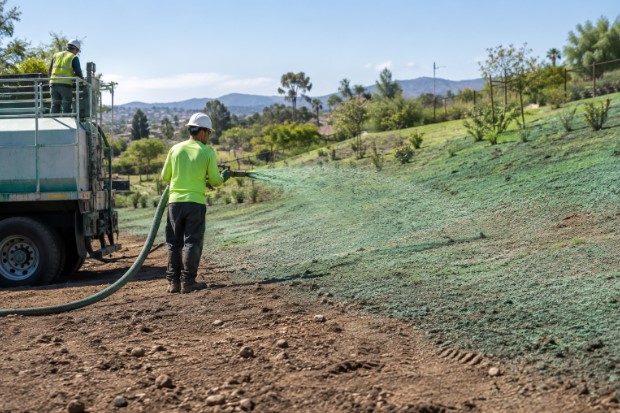
Hydroseeding applies a slurry that may include seed, fiber mulch, water, fertilizer, and tackifier or soil-binding material. The mulch helps carry and cover seed, while the binder can help hold the applied materials together on the surface during early establishment. Quality Hydroseeding has seeded lawns since 1980 and also works on slopes, native plants, flowers, large commercial areas, roads, and highway-related projects.
Hydraulic application makes it possible to cover broad, irregular, or difficult terrain more evenly than hand broadcasting in many situations. It does not create mature vegetation immediately. Germination and coverage still depend on seed selection, soil conditions, temperature, weather, watering, slope conditions, and protection from traffic or washouts.
Which Groundcover Options May Fit the Site?
Native Plants and Wildflower Mixes
Native plant and flower mixes can suit slopes, roadside areas, restoration projects, and landscapes where a more natural appearance is preferred. Selection should reflect the location’s elevation, rainfall pattern, soil type, exposure, and maintenance expectations. California’s seed selection tool considers elevation, rainfall, soil type, and regional plant communities, but it is intended to supplement local site knowledge rather than replace a site visit.
Lawns and Residential Groundcovers
For a thin, damaged, or unfinished lawn, hydroseeding can establish turf or other specified ground cover over a larger area without installing individual plants. It may be especially useful where a property needs consistent coverage on uneven ground, provided the owner can supply the necessary irrigation and follow the establishment instructions.
Commercial and Public-Sector Mixes
Commercial developments, public roads, construction sites, and larger disturbed areas can require project-specific seed documentation, inspection coordination, and erosion-control planning. Quality Hydroseeding states that it has completed work on county and state highways, roads, and large commercial areas, including a Highway 58 project completed in partnership with Caltrans.
What Should a Site Review Consider?
A practical plan begins with the conditions that will affect seed establishment and soil protection. Important considerations include:
- Slope angle: Steeper slopes can increase runoff and may need netting, blankets, or other measures in addition to sprayed material.
- Soil condition: Compacted, depleted, or poorly draining soil can limit germination and root development.
- Sun and weather exposure: Heat, wind, shade, and storm timing influence moisture needs and planting windows.
- Water access: New seed needs suitable moisture during its establishment period.
- Intended use: A lawn, native hillside, commercial lot, and roadside each have different appearance, durability, and maintenance goals.
Caltrans guidance describes hydroseeding as a surface treatment that can protect soil from raindrop impact, conserve moisture, and provide longer-term erosion control as vegetation develops. It also notes that poor soils and locations where material may not stay in place may need complementary treatments. A Forest Service investigation of Alabama roadside slopes found that vegetation treatments affected sediment yield and runoff. Still, results from that setting should not be treated as a performance guarantee for Southern California properties.
Where Can Hydroseeding Be Used?
- Homes: New lawns, lawn restoration, flower areas, and bare groundcover zones.
- Slopes and hillsides: Vegetation intended to improve surface cover and support erosion-control plans.
- Construction sites: Disturbed soil following grading or development work.
- Burn areas: Carefully planned reseeding where site conditions and land-management requirements allow.
- Commercial properties: Large lots, developments, road corridors, and landscaped open areas.
- Dust-control areas: Exposed sites where temporary or longer-term surface cover may help reduce loose soil.
How Does Hydroseeding Compare With Other Methods?
- Hydroseeding: A strong fit for broad areas, slopes, lawns, restoration work, and irregular terrain. It requires proper preparation and establishment care.
- Hand planting: Best for small areas, ornamental layouts, and projects needing exact placement of individual plants. It can be labor-intensive over large sites.
- Sod: Useful when an immediate green turf surface is the goal. It may be less practical for expansive slopes, native restoration, or highly irregular ground.
- Mulch and erosion mats: Helpful for temporary protection or added stabilization, but they do not replace the long-term root structure of established vegetation.
What Happens During a Quality Hydroseeding Project?
- The property owner describes the location, approximate area, slope, site condition, and desired result.
- The site is reviewed for soil, drainage, access, exposure, existing vegetation, and erosion concerns.
- A mix of seed, mulch, binder, and related materials is selected for the project goals.
- The surface is prepared as needed by clearing debris, grading, loosening soil, or completing other agreed-upon work.
- The hydroseed slurry is applied across the target area.
- The owner follows watering, access, and maintenance guidance while vegetation establishes.
Frequently Asked Questions
Can hydroseeding help with slope erosion?
It can help establish protective vegetation on suitable slopes, but severe runoff, steep grades, drainage issues, or unstable soil may require additional engineering or erosion-control measures.
Does Quality Hydroseeding serve homeowners?
Yes. The company serves homeowners as well as commercial and government clients, with services for lawns, groundcovers, slopes, flowers, and bare areas.
How soon will a hydroseeded area look established?
Timing varies by seed mix, weather, watering, soil preparation, and site conditions. A contractor can provide expectations based on the specific project rather than promising a uniform timeline for every property.